Walk into Pechersky Orthodontics for a first appointment and you’ll probably ask some version of this question before you even sit down. How long does it take to see results with braces? It’s one of the most common things patients want to know, and for good reason. Every mouth, every bite, and every treatment option moves on its own schedule. The good news? Most patients notice early visible movement within the first month, with full results arriving over 12 to 36 months depending on the smile plan Dr. Pechersky designs for you.
Here’s what to expect, broken down by stage, appliance, and the real-world factors that shape your results.

What Does “Seeing Results” With Braces Actually Mean?
“Results” means different things at different stages. Early on, results look like small shifts in alignment you can see in the mirror. Mid-treatment, results involve rotation of individual teeth, closing gaps, and starting bite correction. By the end, results mean a stable, functional bite with teeth settled into their final positions.
Most patients notice visible tooth movement within 2 to 4 weeks of starting their smile plan at Pechersky Orthodontics. That’s cosmetic progress. Structural progress, like correcting how your upper and lower teeth come together, takes much longer because bone has to remodel around each tooth. Teeth typically move through a 3 to 5 week biological cycle per adjustment, which is why appointments are spaced the way they are.
A full smile plan averages 12 to 36 months. The range is wide because mild spacing is nothing like a deep overbite with rotations. Both deserve a plan built around your biology, not a one-size-fits-all timeline.
How the Braces Timeline Works: Month-by-Month Progression
Below is a general month-by-month look at what happens during a typical braces experience. Your personal timeline may be shorter or longer, but this gives you a solid framework.
- Weeks 1 to 4: Initial adjustment. Your teeth begin to feel pressure from the brackets, wires, or aligners. Some tenderness is normal for the first few days. Movement starts right away at the cellular level, even if you can’t see it yet.
- Months 2 to 3: First visible changes. This is when most patients start seeing noticeable alignment shifts. Front teeth often respond first because they have single roots and move more easily than molars.
- Months 4 to 6: Rotations and gap closure. Teeth that were twisted begin rotating into position. Spaces start closing. If you’re wearing elastics, this is often when Dr. Pechersky adds them to the plan.
- Months 7 to 12: Midpoint bite work. Major alignment is well underway. Bite correction becomes the focus, especially for overbites, underbites, and crossbites. You’ll likely see dramatic improvement by month 12.
- Months 12 to 24: Fine-tuning and detailing. Root positioning, final rotations, and small adjustments bring everything into place. This stage is slower but critical for a stable, lasting result.
- Retention phase. Once your braces come off, retainers hold the results. Teeth want to drift back, so retention is part of the long-term plan, not an optional extra.
Each stage builds on the one before it. Skipping appointments or missing elastic wear can push every stage back.
Benefits of Understanding Your Braces Timeline
Knowing what’s coming makes the whole experience easier. Here’s why timeline awareness matters:
- Realistic expectations reduce anxiety. When you know early tenderness fades in a week, or that month three is often a visual turning point, you can relax into the process instead of second-guessing it.
- Better compliance with elastics and hygiene. Patients who understand how elastics drive bite correction tend to wear them as prescribed. Same goes for brushing and flossing around brackets.
- Smarter planning around life events. Weddings, graduations, senior photos, big family gatherings. If you know roughly when your braces are coming off, you can plan ahead. Dr. Pechersky often helps families time the smile plan around major milestones.
- Stronger communication with your orthodontist. When you understand the stages, you can ask better questions. “Why aren’t my molars moving yet?” has a real answer, and the conversation gets more productive.
- Consistent appointment attendance. Adjustments every 4 to 8 weeks keep momentum. Each visit builds on the last. Missing one can delay the next stage by weeks.
- Appreciation for early intervention. Kiddos and teens who start treatment at the right age often finish faster. Growing jaws respond quickly, which is one reason the American Association of Orthodontists recommends a first orthodontic check by age 7.
Understanding the timeline makes you a partner in your own care. That’s always the best outcome for your smile.
Timeline Comparison: Metal Braces vs Clear Braces vs Clear Aligners
Different treatment types move teeth at different rates. The best option depends on your bite, your lifestyle, and how complex the correction needs to be. Here’s a side-by-side look.
| Treatment Type | Average Duration | First Visible Results | Best For |
|---|---|---|---|
| Metal Braces | 18 to 24 months | 8 to 12 weeks | Complex bite correction, rotations, severe crowding |
| Clear Braces | 18 to 30 months | 8 to 12 weeks | Patients wanting fixed treatment with a lower-profile look |
| Clear Aligners | 12 to 18 months | 4 to 6 weeks | Mild to moderate alignment and spacing cases |
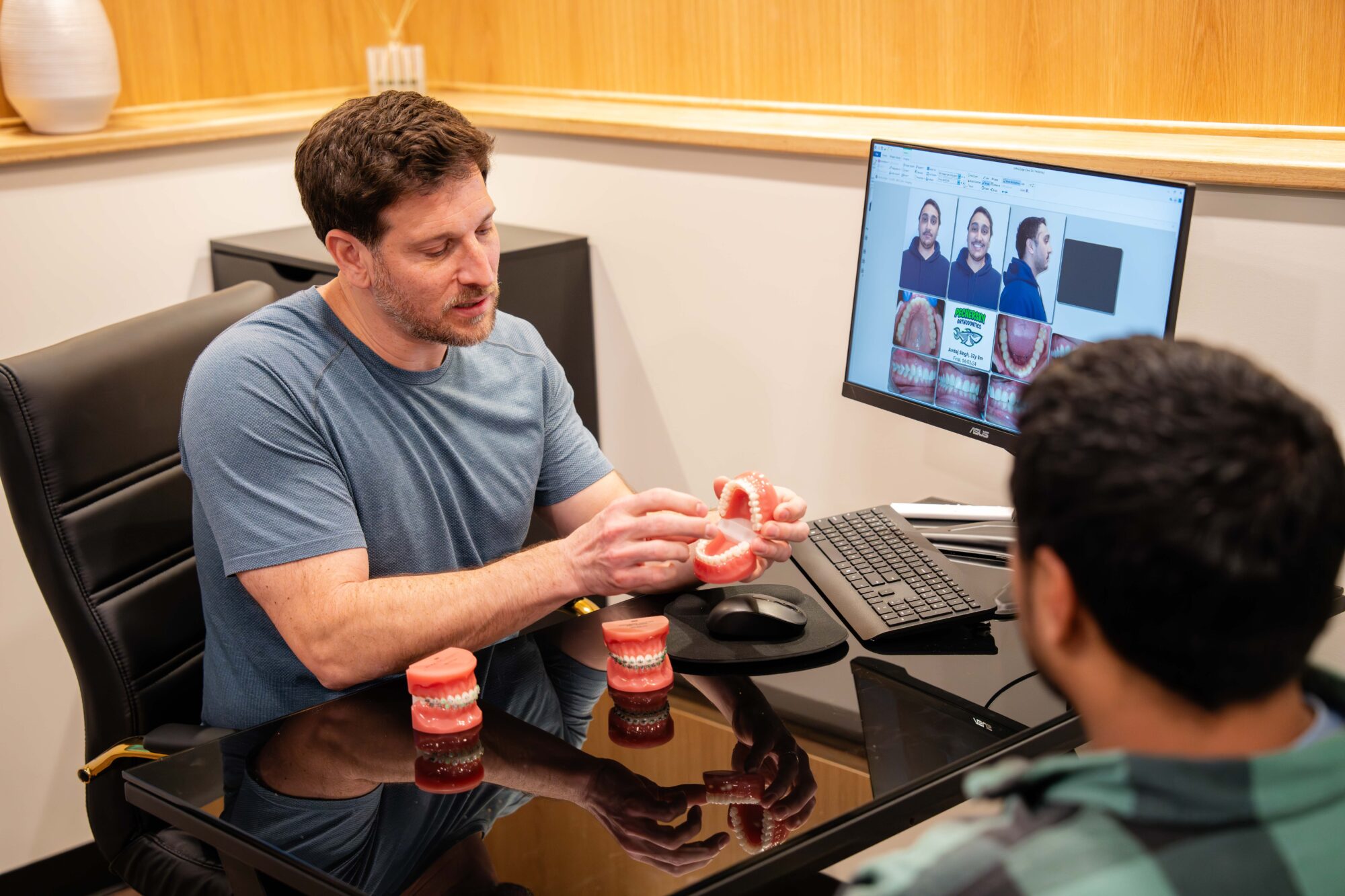
Metal braces are the workhorse. They handle the toughest cases efficiently and give Dr. Pechersky the most control over every tooth. For deep overbites, significant rotations, or complex multi-tooth movement, metal braces are often the fastest path to a great bite.
Clear braces work the same way as metal, but with tooth-colored brackets. They blend in to stand out. The smile plan runs slightly longer in some cases because the materials require a gentler touch, but the clinical outcome is comparable.
Clear aligners often show the earliest visible changes because each tray makes small, specific movements every one to two weeks. For mild to moderate cases, aligners can finish in 12 to 18 months. The catch? You need to wear them 22 hours a day. Compliance drives the timeline.
Complex bite issues almost always favor fixed braces for efficiency. Mild cases often do beautifully with aligners. Dr. Pechersky will walk you through what fits your situation during your free consult.
Factors That Affect How Long Treatment Takes
Two people with similar-looking bites can finish their smile plan months apart. Several things influence your personal timeline, and no two cases play out identically:
- Severity of the case matters most. Mild spacing moves faster than deep crowding. A simple crossbite moves faster than a jaw discrepancy. The more that needs to move, the longer the smile plan takes.
- Patient age plays a role. Teen bone remodels faster than adult bone. Adults absolutely get great results, but the biology moves at its own pace. It’s never too late to get a great bite, just know the clock ticks a little differently.
- Compliance. Wearing elastics as prescribed, keeping aligners in for 22 hours a day, and showing up for appointments all affect how quickly teeth move. Missed elastics can add months.
- Appointment consistency. Adjustments every 4 to 8 weeks keep things on track. Skipping or rescheduling repeatedly stretches the timeline.
- Individual biology. Some teeth move easily. Others take their time. Root shape, bone density, and healing response all play a part.
- Accelerated technologies. In some cases, specific tools and techniques can speed things along. Dr. Pechersky will discuss whether any apply to your plan.
Your timeline is personal. The best way to get a real answer is a direct look at your teeth.
Who Sees the Fastest Results? Candidacy Factors
Some patients finish faster than others, and it’s rarely random. Here’s who tends to see the quickest results:
- Teens with active jaw growth. Growing bone responds quickly to orthodontic forces. Many teens finish in 12 to 18 months when the case is straightforward.
- Mild crowding or spacing cases. Small corrections can wrap up in 6 to 12 months, sometimes with clear aligners alone.
- Strong compliance habits. Patients who wear elastics faithfully, keep aligners in, and brush well around brackets consistently finish on schedule or ahead of it.
- No complex bite or jaw discrepancies. When the bite is already close to balanced, the smile plan focuses on alignment only, which moves faster.
- Good clear aligner candidates. Patients with limited correction needs often choose aligners and see visible shifts within the first month.
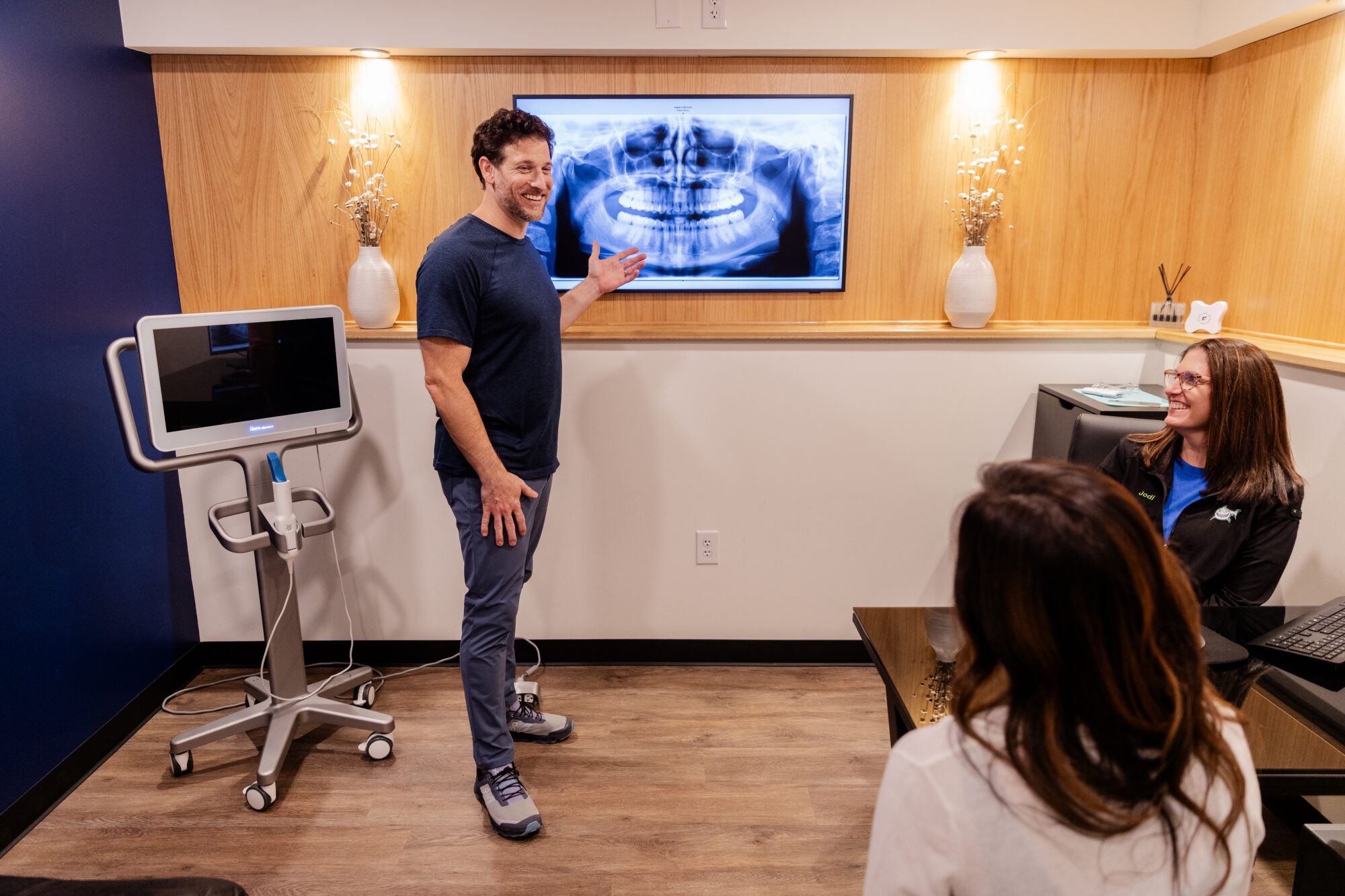
The best way to know where you fit? Start with a free consult at Pechersky Orthodontics. Dr. David Pechersky is a 30-year veteran of orthodontics, and his approach pairs decades of chairside experience with digital scans that are easy and painless. You’ll leave with a clear picture of your timeline, your options, and what your great bite will look like.
Pechersky Orthodontics has cared for multi-generational families (some now in their third round of treatment with the practice) and welcomes patients of every age and ability, including compassionate care for patients with special needs.
Frequently Asked Questions About Braces Results Timeline
How soon will I notice my teeth moving?
Visible movement usually shows up within 2 to 4 weeks of starting your smile plan at Pechersky Orthodontics. Front teeth usually shift first because they have single roots and respond quickly to orthodontic pressure. You may feel pressure or tenderness during the first week, which is a sign that your teeth are already beginning to move.
Can braces straighten teeth in 6 months?
Mild cases, yes. Small spacing issues or minor alignment concerns can sometimes be corrected in 6 to 12 months. However, moderate to complex cases involving bite correction, rotations, or significant crowding typically need 18 to 24 months. Dr. Pechersky will give you a realistic timeline during your free consult.
Do braces work faster on adults or teenagers?
Teenagers typically see faster results because their jaw bones are still growing and remodel more quickly. Adults get excellent results too, but the biology of tooth movement is slower once growth has stopped. Adult treatment often takes a few extra months compared to a similar teen case.
Is Invisalign faster than metal braces?
Case complexity decides the answer. For mild to moderate corrections, clear aligners often finish in 12 to 18 months, which can be faster than metal braces. For complex bite work, rotations, or severe crowding, metal braces are usually more efficient because they give the orthodontist more direct control.
Why are my braces taking longer than expected?
Several factors can extend the smile plan: missed elastic wear, rescheduled appointments, poor oral hygiene causing inflammation, or an unexpected biological response. Life happens, and timelines sometimes shift. If you’re concerned about your progress, talk with Dr. Pechersky at your next appointment. There’s almost always a clear reason and a plan to get back on track.
How often do braces need adjusting to see results?
Expect to come in every 4 to 8 weeks for adjustments. This spacing matches the natural biological cycle of tooth movement, giving your teeth time to respond between visits. Consistent attendance keeps your timeline on track and helps avoid delays.
Ready to find out what your personal braces timeline looks like? Dr. David Pechersky and the team at Pechersky Orthodontics offer free consults at both offices. Visit our Pittsburgh office at 1900 Murray Ave., Ste. 305, or call (412) 421-5112. Our Monroeville location is at 3845 Northern Pike, and you can reach it at (412) 372-6059. Book your free consult today and get your great bite started.