Choosing the Best Orthodontist: What Makes One the “Best” Choice?
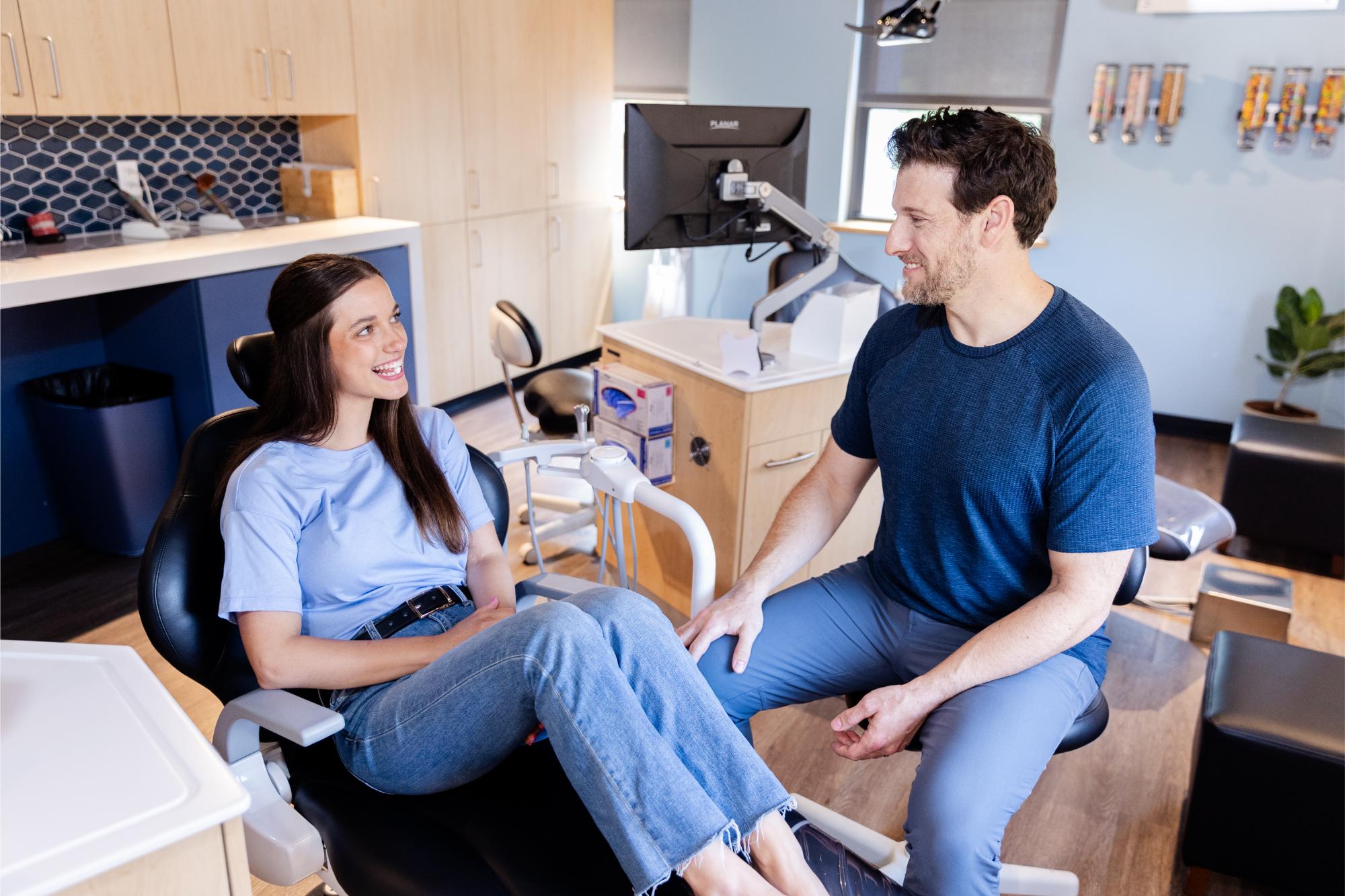
Choosing the best orthodontist comes down to three things: specialist credentials, several treatment options, and clear communication. An orthodontist completes two to three years of residency after dental school. A general dentist does not. The right specialist explains your diagnosis in plain language and gives you more than one path forward.
Board certification through the American Board of Orthodontics is voluntary. Orthodontists who pursue it sit for additional written and clinical exams, so it’s a useful signal of extra rigor when you’re comparing offices.
Here’s the part most guides skip: “best” is situational. The office that’s perfect for your 8-year-old’s expander may not be the same office you’d pick for adult clear aligners. Case complexity, age, and your daily schedule all shift the answer.
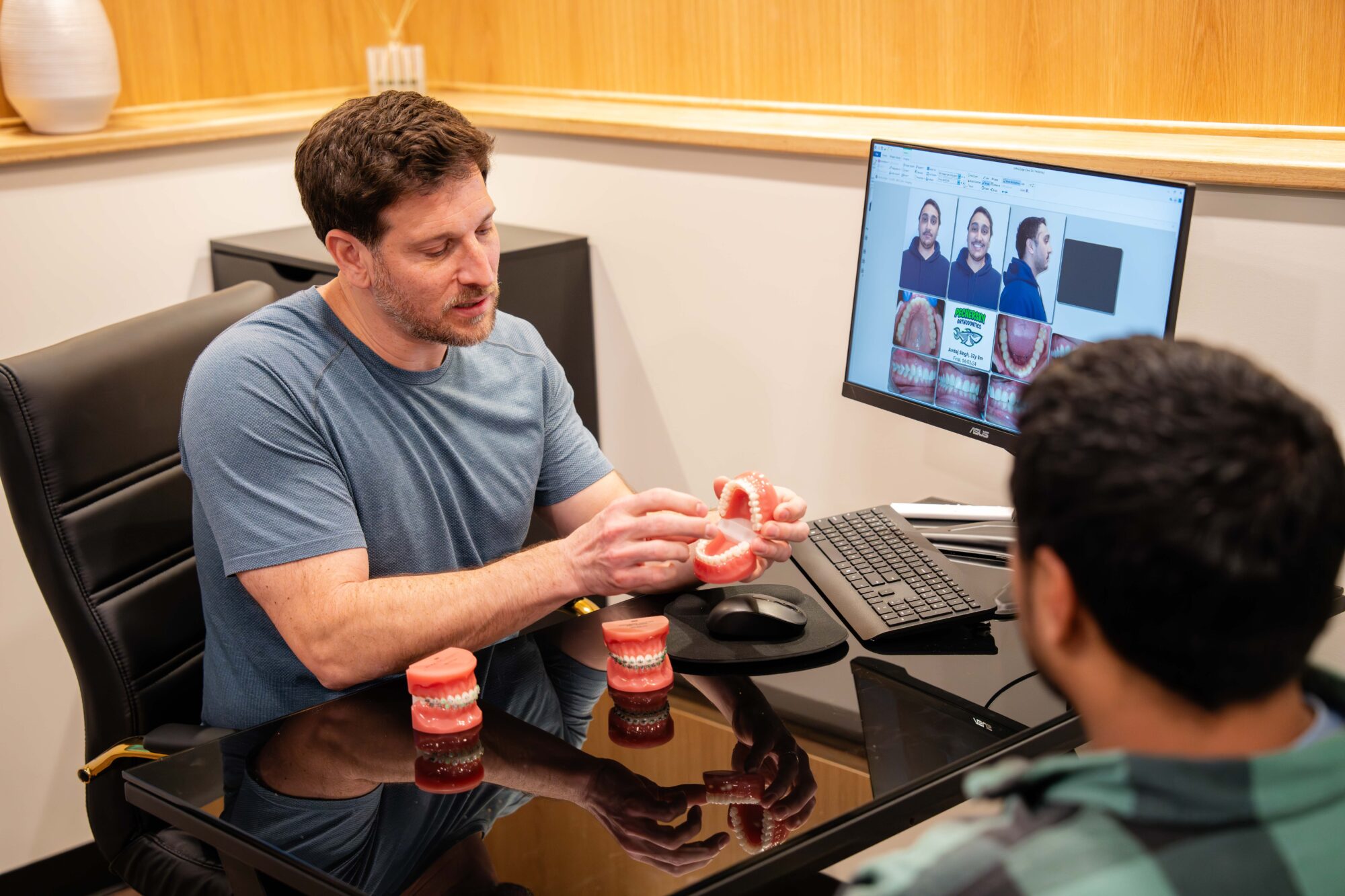
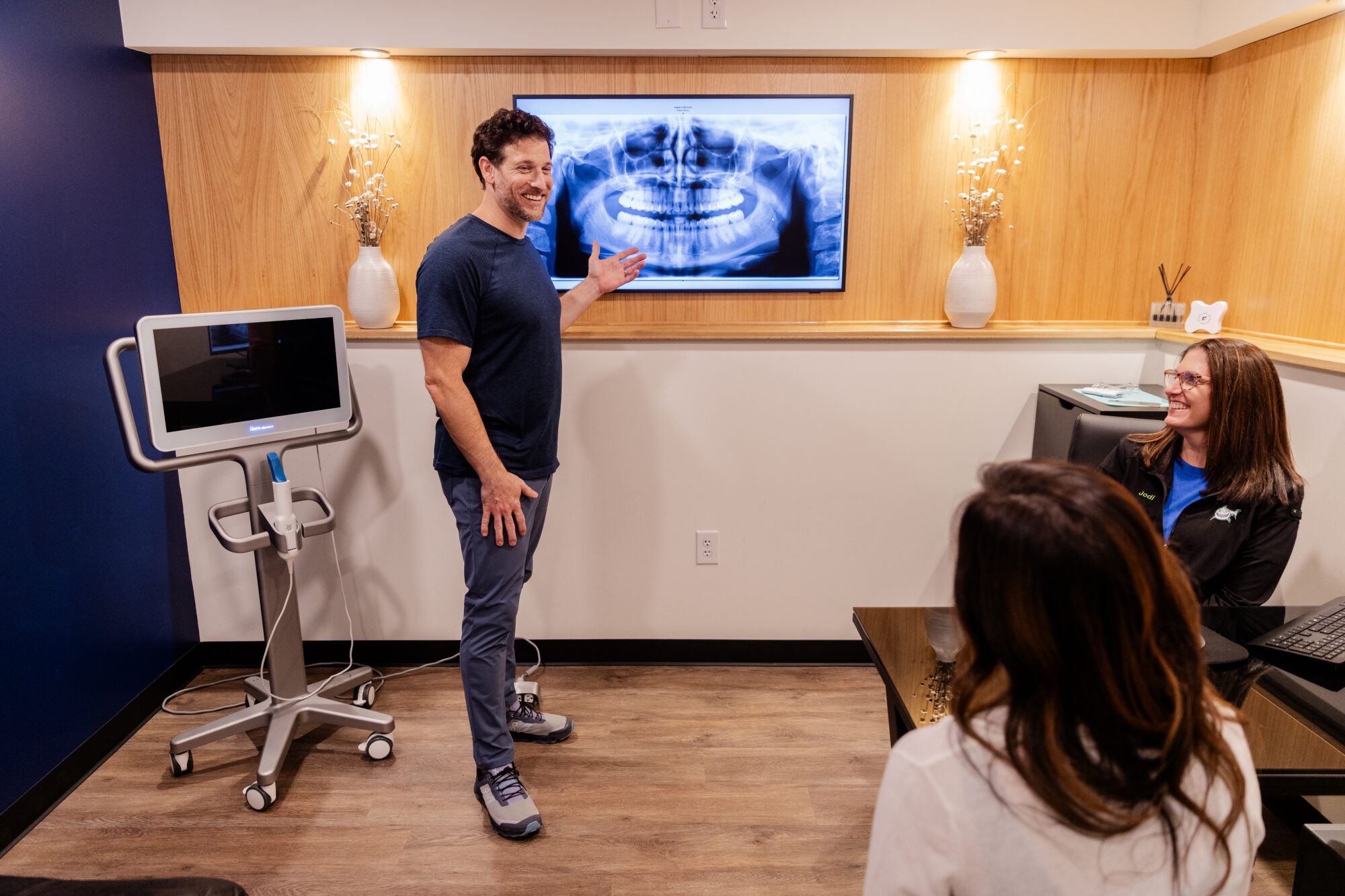
Technology matters too. Practices with digital scans and 3D planning in-house tend to mean fewer messy trays, faster turnaround, and fewer appointments on your calendar. At Pechersky Orthodontics, Dr. David Pechersky uses digital scans and 3D-printed expanders for exactly that reason.
How to Evaluate an Orthodontist: A Step-by-Step Process
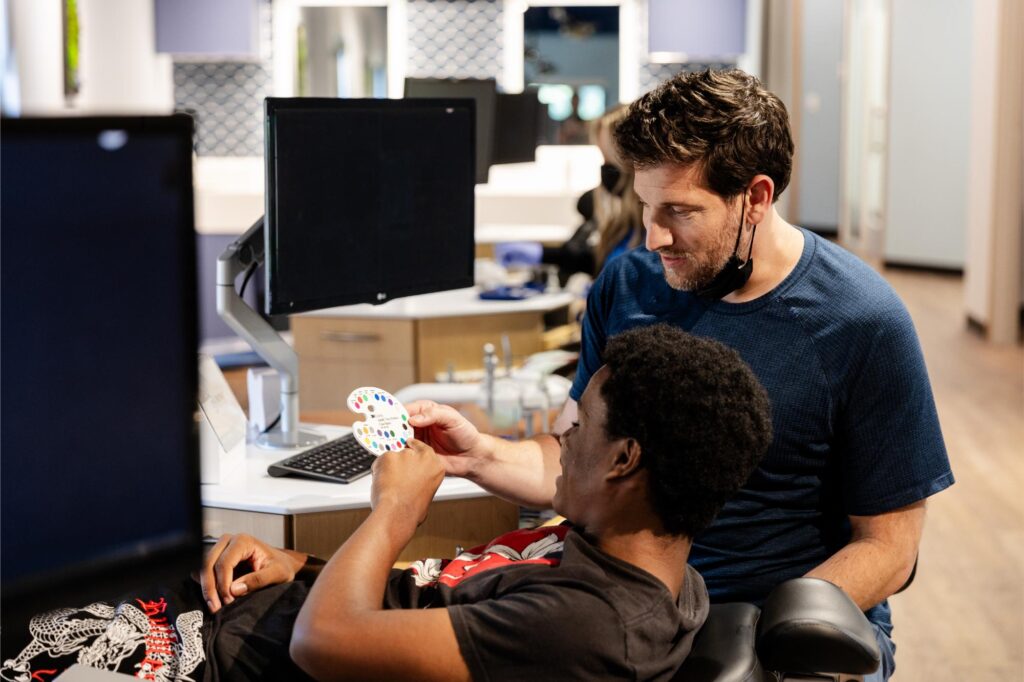
Evaluating an orthodontist takes six steps: verify credentials, review similar cases, book a consult and compare the diagnosis, ask who performs adjustments, confirm total cost and what’s included, then check office logistics. Most families can get through all six in a week or two. The consult itself is usually free.
1. Verify credentials and training.
Confirm the provider completed an accredited orthodontic residency, not just dental school. Ask whether they’re board certified or actively pursuing certification, and check their American Association of Orthodontists membership.
2. Look at cases like yours.
Before-and-after photos of a severe crowding case tell you little if your concern is an open bite. Ask to see results that match your situation and your age group.
3. Book a free consult and compare.
You’re comparing three things: the clarity of the diagnosis, the detail in the treatment plan, and the honesty of the timeline. Vague answers are a red flag.
4. Ask who actually performs your adjustments.
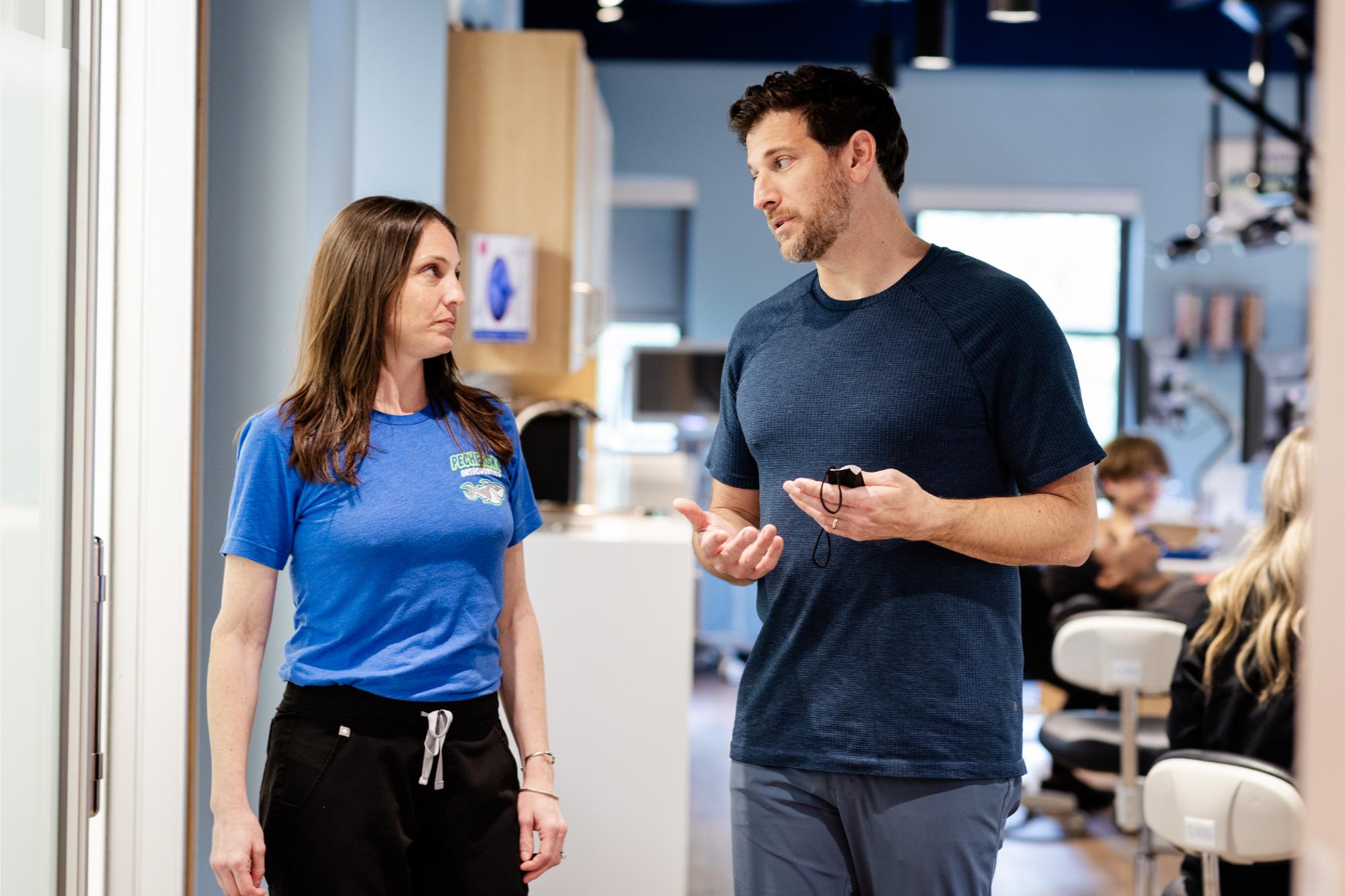
In a single-provider office, you see the same face every time. Ask how after-hours issues get handled, like a loose bracket or a broken wire on a Saturday.
5. Confirm the full financial picture.
Get the total fee in writing. Then ask specifically about retainers, refinements, records, and emergency appointments.
6. Check the logistics.
Early morning availability, school-friendly scheduling, virtual consult options, and typical wait times all affect whether you’ll actually keep your appointments.
Signs You’ve Found a Great Orthodontic Practice
Signs of a great orthodontic practice include a complimentary first visit that produces real records, more than one treatment option presented, digital scans rather than trays, predictable fees with no late surprises, and the same provider at every appointment. Communication that adapts to the patient’s age matters just as much.
Some things you can spot on the first visit. Others show up over months of care.
- A complimentary first visit with real records. You should leave with images, a written treatment plan, and a clear fee, not a sales pitch.
- More than one option on the table. If every patient gets the same recommendation, that’s a sign the office is fitting you to their system instead of the other way around.
- Digital scans instead of goopy trays. Scanning is quick, and patients consistently describe it as easy and painless.
- Fees you can predict. No surprise charges when it’s time for retainers or a small refinement at the end.
- The same provider every appointment. Continuity means nobody has to re-learn your case.
- Good communication across ages. A great team talks to kiddos differently than they talk to a 45-year-old, and both walk out understanding what happens next.
One more sign worth watching for: how the office handles patients who need extra time or a gentler approach. Pechersky Orthodontics has cared for patients with special needs and their families, including multi-generational households now on their third round of treatment with Dr. Pechersky.
Comparing Your Treatment Options and Provider Types
Not all providers offering teeth straightening have the same training or the same tools. Here’s how the three main categories stack up.
| Feature | Orthodontist | General Dentist | Mail-Order Aligners |
|---|---|---|---|
| Training | Dental school plus 2-3 year orthodontic residency | Dental school | No in-person provider exam |
| Supervision | Hands-on, in person | Varies by office | Remote, photo-based |
| Diagnostics | X-rays, scans, full records | Varies | Typically none |
| Case range | Simple to complex | Usually mild cases | Mild spacing and alignment only |
| Adjustments | In-office, chairside | In-office | None |
Remote aligner companies skip the things that catch trouble early: X-rays, a physical exam, and a clinician who can adjust course mid-treatment. That’s fine for very mild spacing. It’s risky for anything else.
Once you’ve settled on the type of provider, the appliance itself is the next decision, and each option suits a different daily routine.
Clear aligners
Clear aligners are removable and low-visibility. They handle a lot of cases well, but results depend on you wearing them. Dr. Pechersky invented Movemints®, patented clear aligner mints that help new patients seat their trays comfortably during those first weeks.
Metal braces
Metal braces remain the workhorse. They’re fixed, they’re budget-friendly, and they manage complex movements that other options can’t.
Clear braces
Clear braces blend in while doing the same job as their metal partners. Blend in to stand out.
Crossbites, open bites, and severe crowding almost always call for a specialist-led plan. And before you fall in love with one option, ask the office which ones they actually offer.

What Influences the Cost of Orthodontic Treatment
No two orthodontic quotes look quite alike, and the reasons usually trace back to case complexity, appliance type, treatment length, and how much follow-up care the fee actually covers. A mild spacing case treated in under a year costs far less than a complex bite corrected over two years with an expander. Two quotes for the same appliance can differ simply because one includes retainers and one doesn’t.
| Cost Factor | What Drives It Up |
|---|---|
| Complexity | Severe crowding, jaw alignment issues, crossbite or open bite |
| Appliance type | 3D palatal expanders, TMD appliances, or added phases of care |
| Treatment length | Longer cases mean more appointments and more materials |
| Included follow-up | Retainers, refinements, records, and emergency appointments |
Aligner and braces pricing often overlaps more than people expect. The materials and monitoring differ, not necessarily the total.
On the coverage side, many dental plans include a separate orthodontic benefit with a lifetime maximum rather than an annual one. FSA and HSA dollars typically apply as well. Pechersky Orthodontics offers financing and insurance help plus an online payment portal, so the total can be spread across the length of treatment rather than paid all at once.
Last thought on price: the lowest quote is rarely the best value if retreatment shows up two years later.
Who Should See an Orthodontist, and When
The American Association of Orthodontists recommends a first orthodontic evaluation around age 7. By then, enough permanent teeth have come in for a specialist to spot developing issues.
- Kids (ages 7 to 10): This is about monitoring, not necessarily treating. Dr. Pechersky, an orthodontic specialist with 30 years of excellence behind him, watches jaw growth, spacing, and whether early expansion would make later treatment simpler.
- Teens: Peak timing. Permanent teeth have settled, growth is still on your side, and both braces and clear aligners work well.
- Adults: Crowding that relapsed after childhood treatment, bite wear, jaw discomfort, or purely cosmetic goals all bring adults in. It’s never too late to get a great bite.
- Anyone with jaw clicking, stiffness, or clenching: TMD refers to discomfort or stiffness in the temporomandibular joint, the hinge that moves your lower jaw. An evaluation can tell you whether an appliance would help.
An early visit often ends with “let’s check back in a year.” That’s a good outcome. Knowing treatment can wait is just as valuable as starting it.
Dr. David Pechersky is a specialist orthodontist who completed a full orthodontic residency after dental school, and Pechersky Orthodontics has built 30 years of excellence around one provider seeing every patient. He is also the inventor of Movemints®, the patented clear aligner mints now used by patients well beyond the practice’s own neighborhood, an example of the outside-the-box thinking that shapes his approach to care.
Our offices welcome smiles for the entire family, from first evaluations at age 7 to adults starting over. Free consults are available in person or virtually, so bring your questions and your notes.
Beware of great bites!
Get your great bite with a free consult
Frequently Asked Questions
What questions should I ask at an orthodontic consultation?
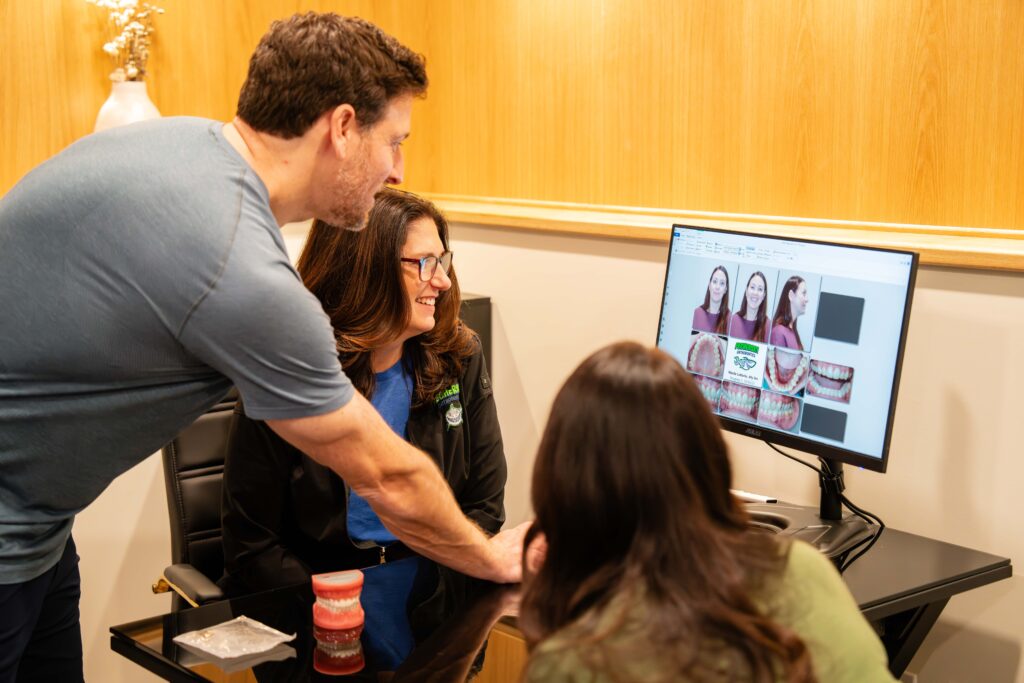
Ask what specifically is causing your bite issue, what options exist, how long each would take, and what the total fee includes. Then ask who performs your adjustments and how emergencies are handled after hours. Written answers beat verbal ones. A good office will put the plan and the price on paper before you leave.
Is a board-certified orthodontist better than one who isn’t?
Board certification through the American Board of Orthodontics is voluntary and requires additional written and clinical examination beyond residency. It’s a meaningful signal of commitment, but plenty of skilled orthodontists practice without it. Weigh certification alongside years in practice, case results, and how well the provider communicates with you.
Can a general dentist do Invisalign or braces?
Yes, general dentists can legally offer both in most states. The difference is training depth: orthodontists complete two to three years of specialty residency focused entirely on tooth movement and jaw development. For mild cases, a dentist may be a fine choice. For crossbites, open bites, or significant crowding, a specialist-led plan is the safer call.
How long does orthodontic treatment usually take?
Most full cases run 12 to 24 months, though simple alignment can finish faster and complex bite correction can run longer. Your timeline depends on how far teeth need to move, your age, and how consistently you wear aligners or elastics. Your orthodontist should give you a realistic range at the free consult, not a guarantee.
Do I need a referral to see an orthodontist?
No. Orthodontists are direct-access specialists, so you can schedule on your own without a referral from a general dentist. Some insurance plans have their own requirements, so it’s smart to check your policy. Many patients come in on a dentist’s recommendation, but plenty book themselves.
How many consultations should I get before deciding?
Two or three is plenty for most people. Comparing consults helps you see whether the diagnoses line up and whether the fee structures are truly equivalent. Since most orthodontic consults are complimentary, the only real cost is your time. If all three say the same thing, choose based on communication and convenience.