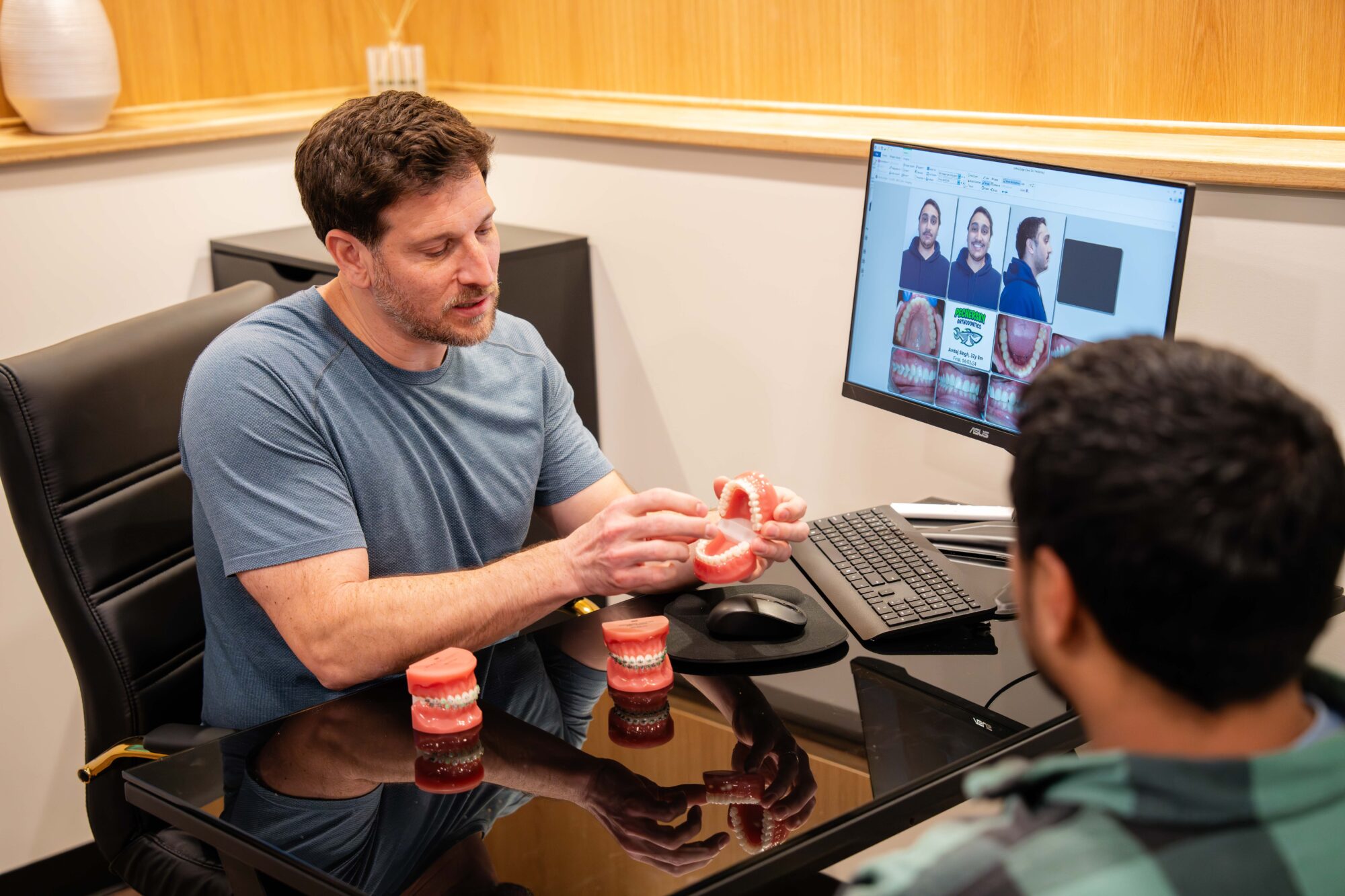

You just finished braces or your final set of clear aligners. Congrats! But here’s the part nobody loves hearing: the work isn’t quite done. Welcome to Retainers 101, your guide from Pechersky Orthodontics to protecting that new smile for the long haul.
Retainers are the unsung heroes of orthodontics. They’re why your great bite stays a great bite.

What Is an Orthodontic Retainer?
A retainer is a custom-made device that holds your teeth in their new position after braces or clear aligners finish their work. It’s built from a digital scan or impression of your smile, so it fits only you. Think of it as the bodyguard for your results.
Here’s why it matters: teeth don’t just stay put on their own. After active treatment, the bone around your teeth needs time to settle. Without something holding things steady, teeth can drift back toward their old spots, a process called orthodontic relapse.
Retainers are different from braces and aligners. Braces and aligners move teeth. Retainers hold them. One does the heavy lifting, the other locks in the win.
Nearly every patient at Pechersky Orthodontics gets a retainer at the end of treatment. It’s not optional advice. It’s standard orthodontic care.
How Retainers Work to Keep Your Smile Straight
After your teeth move into their new position, the bone surrounding them has to remodel and harden. According to the American Association of Orthodontists, this bone remodeling process typically takes 9 to 12 months after active treatment ends. During that window, your teeth are especially eager to wander.
Your mouth is also busy. Every time you chew, swallow, or rest your tongue against your teeth, you’re applying tiny pressures. Those forces add up. Retainers push back with gentle, steady holding force so your teeth don’t budge.
Here’s how the two main styles do their job:
- Removable retainers sit over your teeth and apply light pressure to keep everything aligned
- Fixed retainers anchor your front teeth with a thin wire bonded behind them
Your compliance in that first year matters more than almost anything else. Wear it as directed, and your smile holds. Skip it, and you may watch your results slip in weeks.
One more thing worth knowing: teeth continue to shift slowly throughout life. It’s just biology. That’s why Dr. Pechersky, drawing on 30 years of practice experience, recommends lifetime nighttime retainer wear as the current standard of care.

Types of Retainers: Hawley, Clear (Essix), and Fixed
Not all retainers are built the same. The three main types each have their own strengths, and the right pick depends on your lifestyle, your teeth, and your preferences.
Hawley Retainers
The classic. A Hawley retainer uses a molded acrylic base that sits against the roof of your mouth (or along your lower gums) with a thin metal wire that wraps across the front of your teeth.
- Pros: Durable, adjustable by your orthodontist, lasts many years
- Cons: The front wire is visible, and it takes a few days to get used to speaking with it
- Best for: Patients who want a long-lasting option and don’t mind a visible wire
Clear (Essix) Retainers
Essix clear retainers are the invisible crowd-pleasers. They look a lot like clear aligners, slipping over your teeth with a snug, see-through fit.
- Pros: Nearly invisible, comfortable, easy to wear
- Cons: Wear out faster than Hawleys and typically need replacement every 1 to 2 years
- Best for: Teens, adults, and anyone who finished treatment with clear aligners
Fixed (Bonded) Retainers
A fixed retainer is a thin wire bonded to the backs of your front teeth, usually on the lower arch. You don’t take it out, which means you don’t have to remember it.
- Pros: No compliance needed, invisible from the front, works 24/7
- Cons: Requires floss threaders or a water flosser for cleaning, can break if you bite something hard
- Best for: Patients worried about forgetting, athletes who don’t want to fuss with removal
A quick note on materials: Hawley retainers use acrylic and often a nickel-containing wire. If you have known metal allergies, let Dr. Pechersky know during your appointment so we can choose materials that work for you.
Many patients at Pechersky Orthodontics end up with a combination, like a fixed wire on the lower front teeth and a removable Essix on top. You get the best of both worlds.
Retainer Comparison: Hawley vs. Clear vs. Fixed
Here’s a side-by-side look to help you weigh your options:
| Feature | Hawley | Clear (Essix) | Fixed (Bonded) |
|---|---|---|---|
| Visibility | Visible wire | Nearly invisible | Hidden behind teeth |
| Comfort | Takes adjustment | Very comfortable | Barely noticed |
| Durability | Very high | Moderate | High if intact |
| Lifespan | 5–10 years | 1–2 years | Indefinite if undamaged |
| Cleaning Difficulty | Easy | Easy | Harder (needs floss threader) |
| Compliance Needed | Yes | Yes | No |
| Best Candidate | Long-term wearers | Aesthetics-first patients | Forgetful wearers, athletes |
A few takeaways from the chart:
- If you want zero compliance worries, fixed retainers remove the human-error factor completely
- For aesthetics, Essix wins, followed by fixed (since the wire hides behind teeth), with Hawley last
- Clear aligner graduates often prefer Essix because the feel is familiar
- Metal braces patients commonly go with Hawley or fixed, especially on the lower arch
Dr. Pechersky will walk you through which combination fits your smile and your routine at your retainer appointment.
What If You Lose or Break Your Retainer?
Retainers get lost, chewed, and cracked more often than you’d think, so it helps to know what to expect when it happens:
- Essix clear retainers wear thin over time and need replacement every 1 to 2 years
- Lost or damaged retainers require new digital scans and lab time, which adds to the timeline
- Fixed retainers can need repair if the wire comes loose, which is usually a quick appointment
If you lose or break yours, call us right away. The faster you get a new one, the less chance your teeth have to shift.
How Long Will You Wear a Retainer?
Here’s your realistic timeline, step by step:
- First 4 to 6 months: Full-time wear, 22 hours a day. Only take it out to eat and brush.
- Months 6 to 12: Transition to nighttime-only wear, as directed by Dr. Pechersky
- Year 1 and beyond: Nightly wear, or at minimum several nights per week, indefinitely
- Lifetime: Teeth continue to shift at any age, so nighttime retention is the current standard
Yes, lifetime. We know that sounds like a lot. But wearing a retainer a few nights a week is a tiny tradeoff for keeping the smile you worked so hard to earn.
Signs your retainer needs attention:
- It feels unusually tight when you put it in (teeth may be shifting)
- It feels loose or no longer snaps into place
- You can see visible movement in your front teeth
- Cracks, warping, or discoloration
If any of these pop up, book an appointment. A quick check now beats a round of touch-up treatment later.
How to Clean and Care for Your Retainer
Your retainer lives in your mouth every day. It deserves a cleaning routine. Here are the basics:
- Brush daily with a soft toothbrush and mild soap or non-whitening toothpaste
- Soak weekly in an effervescent retainer cleaning tablet to lift stains and buildup
- Rinse with cool water every time you take it out, never hot (heat warps the plastic)
- Store in its case when not in your mouth, never wrapped in a napkin (that’s how retainers get thrown out at restaurants)
- Keep it away from pets because dogs love to chew them
For fixed retainers, use a floss threader or water flosser daily to clean around the bonded wire. Plaque loves to hide back there.

Retainer FAQs
How long should I wear retainers full-time?
Most patients wear retainers full-time for the first 4 to 6 months after active treatment ends. After that, Dr. Pechersky transitions you to nighttime-only wear. Lifetime nighttime wear is the standard recommendation to keep your great bite stable.
Can I go 2 weeks without my retainer?
It’s risky. Teeth can start shifting within days of stopping retainer wear, and after two weeks your retainer may feel tight or no longer fit at all. If this happens, don’t force it. Call Pechersky Orthodontics and we’ll check the fit and help you get back on track.
Is wearing a retainer for 2 years enough?
No. Teeth continue to shift throughout life because of natural bone changes, chewing forces, and tongue pressure. The current standard is indefinite nighttime wear, which is a small time commitment for a lifetime of straight teeth.
How quickly will teeth move without a retainer?
Noticeable shifting can happen within days to a few weeks, especially in the first year after treatment. The teeth most likely to move first are your lower front teeth. The longer you go without wearing it, the harder it becomes to slip the retainer back in.
Do retainers hurt?
Retainers shouldn’t cause real discomfort. You may feel mild soreness or pressure for the first few days, especially if you’ve skipped a few nights. A well-fitted retainer feels snug but comfortable. If yours is sharp, pinching, or genuinely sore, let us know.
How do I clean my retainer?
Brush it daily with a soft toothbrush and mild soap, and soak it weekly in an effervescent retainer cleaning tablet. Rinse with cool water only, never hot, because heat warps the plastic. Avoid toothpaste with abrasives, which can scratch clear retainers and dull their appearance.
Protect Your Smile at Pechersky Orthodontics
Your retainer is the final step in getting your great bite, and it’s the one that keeps the results looking great for decades. With 30 years of excellence and decades of innovative care, Dr. David Pechersky and the Pechersky Orthodontics team will make sure you leave with the right retainer, the right wear schedule, and the know-how to care for it.
Ready for a replacement retainer or a post-treatment check? Visit our Pittsburgh office at 1900 Murray Ave., Ste. 305, or call (412) 421-5112. Our Monroeville location is at 3845 Northern Pike, and you can reach it at (412) 372-6059. You can also book a free consult online anytime.
Beware of great bites, and let’s keep yours brilliant for life.